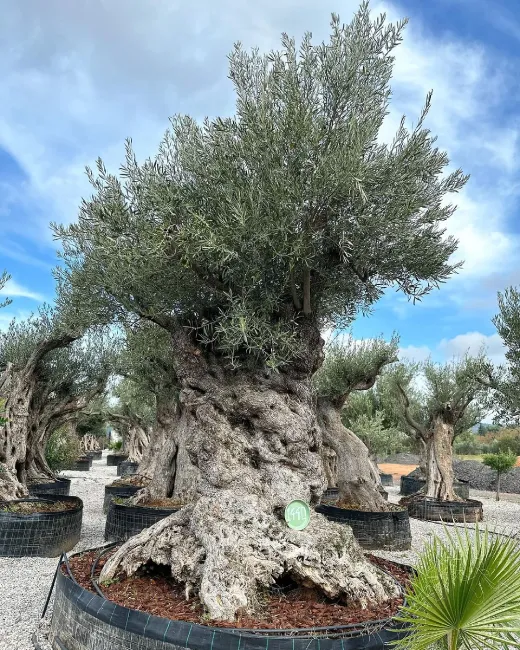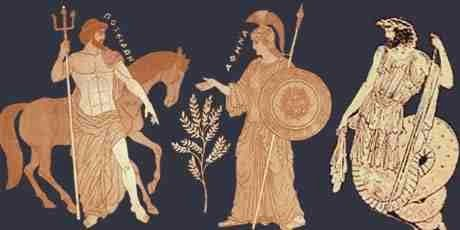
In Greek Mythology, the olive tree was a Divine Gift, specifically from the goddess Athena to the Athenians and from Hercules to Olympia.
The protector of the sacred olive trees was Zeus, “the Morios Zeus.” The truth is that it remains a Divine Gift.
The history of the olive tree is inextricably linked to the lives of the people of the Mediterranean.
It is universally accepted that the presence of the olive tree and its products is an integral part of millennia of tradition in our country.
Its cultivation in the World takes place in the zones with latitudes between 30° and 45° north and 30° and 40° south, in which the most suitable climatic conditions prevail for its growth and fruiting.
The appearance of the olive tree is traced back to great depths in human history and prehistory.
Scientists, with research that is still ongoing, discovered, in the volcanic rocks of Santorini, plant fossils of olive tree leaves, with an impressive age of 50,000-60,000 years.
Its systematic cultivation had already begun in the prehistoric Stone and Bronze Ages.
Olive oil and the fruit of the olive tree have never left Greece, from then until today.
The olive tree was the sacred tree of the city of Athens. According to legend, the goddess Athena offered an olive tree, a symbol of fertility, as a gift to the Athenians. Who, in gratitude, gave the name of the goddess to their city.
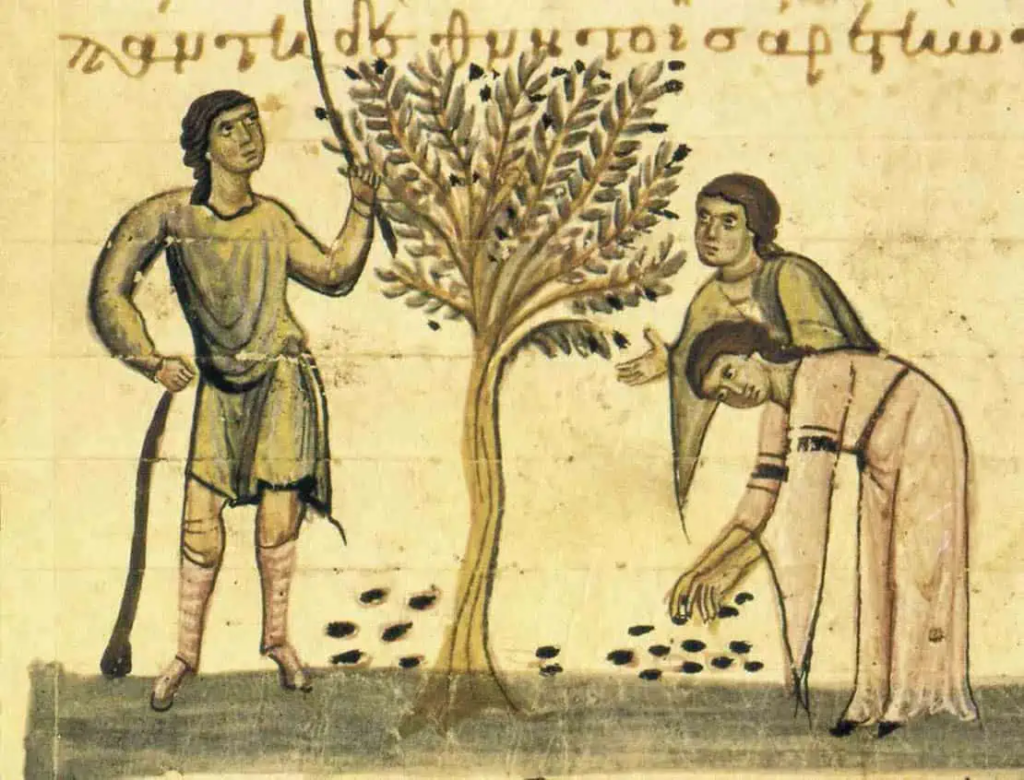
On the Acropolis, there was the sacred olive tree of Athena, the first that the goddess gave to the Greeks.
According to Greek tradition, the first olive tree was planted on the Acropolis by the goddess Athena, in the temple of Erechtheion Morean Zeus, and was thus called the Morean olive tree. Others, however, say that it has a connection with Crete, and specifically with Knossos, Phaistos, Zakros.
In the Academy of Athens, there were the 12 sacred olive trees (Moriae) and the sacred olive grove, from which came the oil, which was given as a prize to the winners of the Panathenaic Games.
Since ancient times, it has appeared in the myths, representations and history of its peoples. The olive branch has always been a symbol of peace, prosperity, fertility and euphoria.
The history of the olive tree began 7000 years ago, in the Mediterranean region and mainly in the Eastern Mediterranean. It is believed, from the various representations, on the vessels and the myths, in the history of the peoples living around the Mediterranean, that it first appeared in Syria.
What is certain is that it came to the European Mediterranean area from Greece, by Phoenician traders. From there it passed to Italy, France, Spain, Portugal, America, Australia.
The Romans, with their conquests, helped to spread the olive tree in the regions of their vast empire.
After the 16th century, Europeans brought the olive tree to the New World and its cultivation began in California, Mexico, Peru, Chile and Argentina. It is estimated that today there are around 800 million or more olive trees in the world, with the vast majority in Mediterranean countries.
In the Peloponnese, olive cultivation began around the 3rd century BC. It is known that the ancient Greeks anointed their bodies and hair with olive oil for care and health.
The Athenians, on their coins, depicted the goddess Athena with an olive wreath on her helmet and an amphora with oil in her hand (or olive branch).
The ancient Greeks considered the olive tree a symbol of the Olympic ideals of Peace, Wisdom and Glory. The only prize awarded to the Olympic champions was a wreath (kotinos) made from a wild olive tree, which they called “kallistefano”. According to legend, the “kallistefanos olive”, from whose branches the kotinos was made, was the first olive tree transplanted to Olympia by Hercules, after completing his 12 labors.
The club of Hercules was made of wild olive. When Hercules completed his 12 labors, he brought from the land of the Hyperboreans (a mythical people who were believed to live beyond the North or in the sky), an olive sprout and planted it in Olympia. From the branches of this olive tree, the victorious Olympians were crowned and they were given a bottle of olive oil as a recognition of victory.
At the 2004 Athens Olympic Games, the winners were crowned again with kotinoi – an olive wreath, as they did in ancient times.
The gold and ivory statue of Zeus at Olympia, the work of Phidias, one of the seven wonders of the world, was also crowned with olive branches.
In the palaces of Knossos, there were more than 1000 rooms. According to mythology, in the basements of the palace, the Minotaur, the monster with the head of a bull and the body of a man, lived imprisoned. There were oil tanks where olive oil was stored (they survive to this day). Inside them, there were stone cisterns where the olive oil was placed, to settle the various foreign elements that were in it (this is a primitive method of separating olive oil).
When the olive oil was purified, it was transferred with a special ladle, into jars, where it was stored. The Cretans then traded it.
The supports of the Parthenon’s portico stood on high pedestals, with a relief representation of the sacred olive tree of Athens, on the trunk of which a snake was coiling.
A fresco in the palace of Knossos depicts an olive grove.
In the Mycenaean tomb of Vapheios, golden goblets are decorated with olive trees.
The olive tree is mentioned in both the Old Testament and the Quran. After the Flood of Noah, as it is said in the Old Testament, the dove that returned from searching for life on land carried an olive branch, an omen that human life had resumed on earth after the biblical catastrophe.
In Christianity, the candlesticks are lit with olive oil. In the Sacrament of Baptism and the Eucharist, olive oil is used.
Olive oil, or according to Homer, “incorporeal liquid gold”, is included in the list of the 10 most beneficial food items.
The therapeutic benefits of olive oil were first mentioned by Hippocrates, father of Medicine, who referred to it as “ideal therapy”.
The ancient Greeks used olive oil to heal wounds and treat diseases.
Olive oil, in addition to its nutritional properties, also has medicinal properties. Hippocrates (the father of Medicine) called it the “great healer”. In the Hippocratic Code, over 60 treatments with olive oil are mentioned.
The use of olive oil for beautification or cleansing of the human body, with the addition of aromatic plants or extracts, is important.
Aristotle revealed the science of olive production.
Solon legislated, prohibiting the cutting of more than 2 olive trees per year from the Athenian olive groves, to protect the olive producers.
The use of olive oil was not the rule of daily diet, but the exception. And they mean the symposia, in the context of the carefree life, of the rich and the wealthy.
The peoples of the Mediterranean, as a sign of appreciation for the olive tree, decorated many objects (vases, jewelry, stones, murals, ….), with designs of olive trees and olive fruits.
In ancient Athens, the Athenians considered themselves civilized and held an olive branch, while the barbarians and slaves held an oak branch, as primitive people.
With an olive branch, messengers came to conclude peace.
Kostis Palamas praises the olive tree.
Van Gogh made paintings depicting olive trees.
Our folk songs talk about the olive tree.
The Romans made jewelry from olive branches as a reward to their prominent citizens and with their conquests, they helped spread the olive tree.
According to Greek tradition, upon the birth of a child, an olive tree was planted and when the child turned 6 years old, the olive tree began to bear fruit.
In Portugal, demons were driven out with an olive branch. In other places, olive oil is sprinkled on the ground for a good harvest.
In Egypt, it was believed that the goddess Isis, wife of Osiris, kept the cultivation of the olive tree a secret.
Olive oil was essential for many uses, it made the night not day but at least more bearable so that life could continue during it. Lamps of all kinds were one of the main utensils of household equipment.
Numerous Greek and Roman writings refer to the olive tree and its beneficial role.